
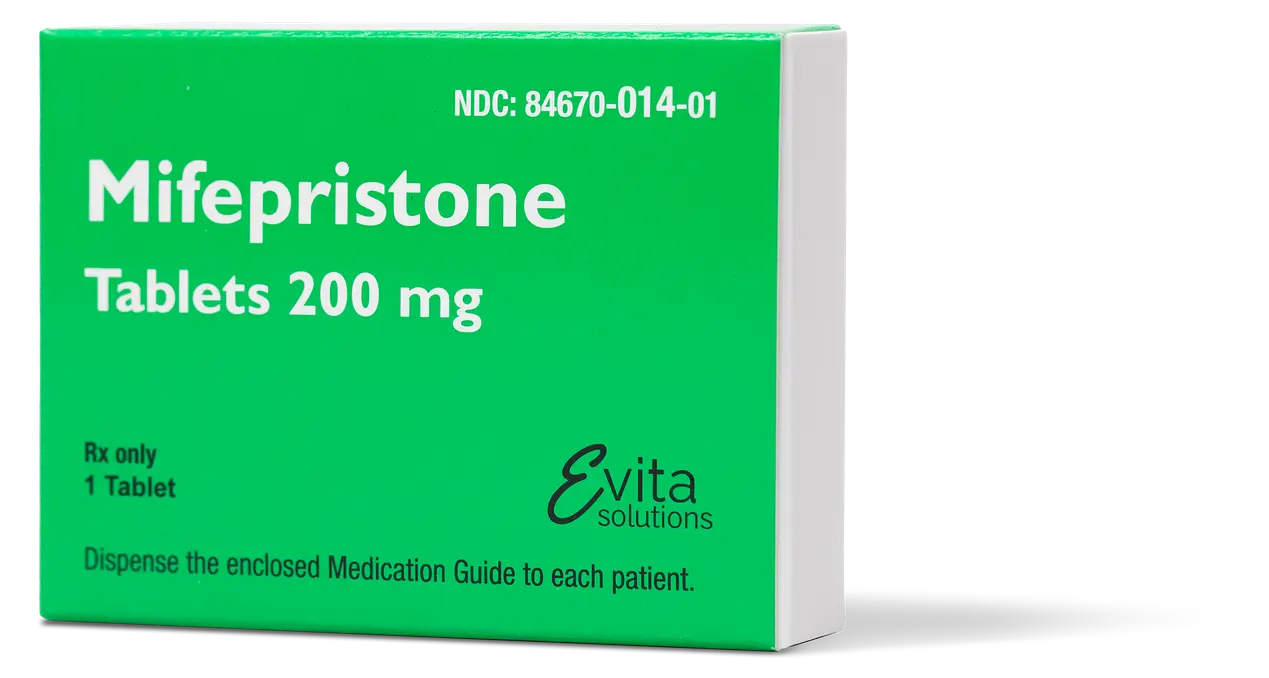
A new FDA-approved generic mifepristone product is available
Medical abortion for termination of early pregnancy
Medical abortion is a non-surgical, FDA-approved option for terminating early pregnancy, up to 70 days from the first day of your patient's last menstrual period. Medical abortion is 97% effective overall when Mifepristone Tablets, 200 mg is taken in combination with misoprostol. Mifepristone blocks the hormone needed for pregnancy to continue, and misoprostol causes contractions to expel the pregnancy from the body. Mifepristone has been approved for use in the U.S. since 2000.
How access to medical abortion has expanded over time
Reduced dosage
The revised label specifies a reduced dose of 200 mg of mifepristone (down from 600 mg).
Extended treatment window
Patients can use Mifepristone Tablets, 200 mg for the termination of early pregnancy up to 70 days from the first day of the patient's last menstrual period.
Increased prescriber privilege
Medical professionals with state-granted prescribing privileges can become mifepristone providers.
Reduced patient burden
Fewer unnecessary visits are required for patients.
Removal of in-person requirement
Patients can access Mifepristone Tablets, 200 mg through telemedicine in states where virtual care is permitted.
More flexible dispensing
Certified prescribers can dispense Mifepristone Tablets, 200 mg directly to their patients or send a prescription to a certified pharmacy.
Updated Prescriber Agreement
Becoming a certified prescriber is more streamlined and the Prescriber Agreement is portable, meaning it can be used wherever you practice.
Generic options
FDA approval of generic Mifepristone Tablets, 200 mg offers more affordable options to patients and providers.
How does mifepristone work?
Mechanism of action
When used in combination with misoprostol, mifepristone is highly effective in ending early pregnancy. Mifepristone inhibits the hormone progesterone, which is needed to prepare the uterine lining for implantation of a fertilized egg for a pregnancy to progress. Blocking the production of progesterone causes the lining of the uterus to soften and break down. In addition to taking mifepristone, medical abortion treatment includes a dose of misoprostol. Misoprostol is a prostaglandin that causes the uterus to contract to expel the pregnancy.
Treatment protocol
Mifepristone is effective for patients who wish to terminate a pregnancy within 70 days of the first day of their last menstrual period. If the patient meets these eligibility criteria, a certified healthcare provider administers or prescribes one dose of Mifepristone Tablets, 200 mg, and provides or prescribes four misoprostol 200 mcg tablets. The patient should take the misoprostol tablets buccally (between the gums and cheek), 24-48 hours after taking the dose of Mifepristone Tablets, 200 mg. Misoprostol can cause cramps, nausea, diarrhea, and other side-effects. Consider prescribing the patient medicine to help with these symptoms.
What to Expect & Follow-Up
The patient should expect cramping and heavy bleeding 2-24 hours after taking misoprostol when the pregnancy passes. It is common for the patient to experience spotting, which can last for several days. Follow-up with the patient 7-14 days after they take the mifepristone and misoprostol to confirm that the medical abortion was successful. Medical abortion is highly effective at pregnancy termination, but 2-7 out of 100 patients will need a follow-up visit for an aspiration procedure to end the pregnancy or to address excessive bleeding that may occur.

Understand the prescribing regulations
- Complete and sign a Prescriber Agreement.
- If you or any prescribers under your supervision will dispense Mifepristone Tablets, 200 mg directly to your patients in your healthcare practice, send your completed Prescriber Agreement to the email or fax number listed on the form.
- If any prescriber in your practice will send prescriptions for Mifepristone Tablets, 200 mg to a certified pharmacy, each prescriber must send a completed Prescriber Agreement to the certified pharmacy of the prescriber's choice.
- Secure a signed Patient Agreement form from each of your patients receiving treatment with Mifepristone Tablets, 200 mg.
Product specifications
Evita Solutions' generic mifepristone
This generic mifepristone is approved by the FDA for termination of early pregnancy. It is biologically identical to the branded product you may already be using.
| AB rated to | Mifeprex® |
| ANDA Number | 216616 |
| Date of FDA Approval | 09/30/2025 |
Ingredients
The active ingredient is 200mg of mifepristone delivered in a yellow tablet. Inactive ingredients include colloidal silicon dioxide, corn starch, povidone, microcrystalline cellulose and magnesium stearate.
Storage
Store at 25°C (77°F); excursions permitted to 15° to 30°C (59° to 86°F). Protect from light.
Tablet description
Circular, biconvex, and yellow in color, mifepristone is intended for oral administration only.
Additional information
For adverse events and product quality complaints, please call 866-718-0098.
Packaging specifics
Packaging Options
Providers can purchase Mifepristone Tablets, 200 mg as a carton (1 individually blistered tablet). Information on packaging is provided below alongside the National Drug Code (NDC) Directory number.
| NDC | Package Description | Dimensions |
|---|---|---|
| 84670-014-01 | Carton (1 tablet, blistered individually) | 2" x 1/2" x 4" |
Mifepristone Tablets, 200 mg is indicated, in a regimen with misoprostol, for the medical termination of intrauterine pregnancy through 70 days gestation.
Important Safety Information
WARNING: SERIOUS AND SOMETIMES FATAL INFECTIONS AND BLEEDING
Serious and sometimes fatal infections and bleeding occur very rarely following spontaneous, surgical, and medical abortions, including following Mifepristone Tablets, 200 mg use. No causal relationship between the use of Mifepristone Tablets, 200 mg and misoprostol and these events has been established.
Atypical Presentation of Infection. Patients with serious bacterial infections (e.g., Clostridium sordellii) and sepsis can present without fever, bacteremia, or significant findings on pelvic examination following an abortion. Very rarely, deaths have been reported in patients who presented without fever, with or without abdominal pain, but with leukocytosis with a marked left shift, tachycardia, hemoconcentration, and general malaise. A high index of suspicion is needed to rule out serious infection and sepsis.
Bleeding. Prolonged heavy bleeding may be a sign of incomplete abortion or other complications and prompt medical or surgical intervention may be needed. Advise patients to seek immediate medical attention if they experience prolonged heavy vaginal bleeding.
Because of the risks of serious complications described above, Mifepristone Tablets, 200 mg is available only through a restricted program under a Risk Evaluation and Mitigation Strategy (REMS) called the Mifepristone REMS Program.
Before prescribing mifepristone tablets, inform the patient about the risk of these serious events. Ensure that the patient knows whom to call and what to do, including going to an Emergency Room if none of the provided contacts are reachable, if they experience sustained fever, severe abdominal pain, prolonged heavy bleeding, or syncope, or if they experience abdominal pain or discomfort, or general malaise (including weakness, nausea, vomiting, or diarrhea) for more than 24 hours after taking misoprostol.
Contraindications
Administration of Mifepristone Tablets, 200 mg and misoprostol for the termination of pregnancy (the "treatment procedure") is contraindicated in patients with any of the following conditions:
- Confirmed or suspected ectopic pregnancy or undiagnosed adnexal mass (the treatment procedure will not be effective to terminate an ectopic pregnancy)
- Chronic adrenal failure (risk of acute adrenal insufficiency)
- Concurrent long-term corticosteroid therapy (risk of acute adrenal insufficiency)
- History of allergy to mifepristone, misoprostol, or other prostaglandins (allergic reactions including anaphylaxis, angioedema, rash, hives, and itching have been reported)
- Hemorrhagic disorders or concurrent anticoagulant therapy (risk of heavy bleeding)
- Inherited porphyrias (risk of worsening or of precipitation of attacks)
Use of Mifepristone Tablets, 200 mg and misoprostol for termination of intrauterine pregnancy is contraindicated in patients with an intrauterine device ("IUD") in place (the IUD might interfere with pregnancy termination). If the IUD is removed, Mifepristone Tablets, 200 mg may be used.
Warnings and Precautions
Infection and Sepsis
As with other types of abortion, cases of serious bacterial infection, including very rare cases of fatal septic shock, have been reported following the use of Mifepristone Tablets, 200 mg. Healthcare providers evaluating a patient who is undergoing a medical abortion should be alert to the possibility of this rare event. A sustained (> 4 hours) fever of 100.4°F or higher, severe abdominal pain, or pelvic tenderness in the days after a medical abortion may be an indication of infection.
A high index of suspicion is needed to rule out sepsis (e.g., from Clostridium sordellii) if a patient reports abdominal pain or discomfort or general malaise (including weakness, nausea, vomiting, or diarrhea) more than 24 hours after taking misoprostol. Very rarely, deaths have been reported in patients who presented without fever, with or without abdominal pain, but with leukocytosis with a marked left shift, tachycardia, hemoconcentration, and general malaise. No causal relationship between Mifepristone Tablets, 200 mg and misoprostol use and an increased risk of infection or death has been established. Clostridium sordellii infections have also been reported very rarely following childbirth (vaginal delivery and caesarian section), and in other gynecologic and non-gynecologic conditions.
Uterine Bleeding
Uterine bleeding occurs in almost all patients during a medical abortion. Prolonged heavy bleeding (soaking through two thick, full-size sanitary pads per hour for two consecutive hours) may be a sign of incomplete abortion or other complications, and prompt medical or surgical intervention may be needed to prevent the development of hypovolemic shock. Counsel patients to seek immediate medical attention if they experience prolonged heavy vaginal bleeding following a medical abortion.
Women should expect to experience vaginal bleeding or spotting for an average of 9 to 16 days. Women report experiencing heavy bleeding for a median direction of 2 days. Up to 8% of all subjects may experience some type of bleeding for 30 days or more. In general, the duration of bleeding and spotting increased as the duration of the pregnancy increased.
Decreases in hemoglobin concentration, hematocrit, and red blood cell count may occur in patients who bleed heavily.
Excessive uterine bleeding usually requires treatment by uterotonics, vasoconstrictor drugs, surgical uterine evacuation, administration of saline infusions, and/or blood transfusions. Based on data from several large clinical trials, vasoconstrictor drugs were used in 4.3% of all subjects, there was a decrease in hemoglobin of more than 2 g/dL in 5.5% of subjects, and blood transfusions were administered to ≤ 0.1% of subjects. Because heavy bleeding requiring surgical uterine evacuation occurs in about 1% of patients, special care should be given to patients with hemostatic disorders, hypocoagulability, or severe anemia.
Mifepristone REMS Program
Mifepristone Tablets, 200 mg is available only through a restricted program under a REMS called the Mifepristone REMS Program, because of the risks of serious complications.
Notable requirements of the Mifepristone REMS Program include the following:
- Prescribers must be certified with the program by completing the Prescriber Agreement Form.
- Patients must sign a Patient Agreement Form.
- Mifepristone Tablets, 200 mg must be dispensed to patients by or under the supervision of a certified prescriber, or by certified pharmacies on prescriptions issued by certified prescribers.
Further information is available at 1-866-718-0098.
Ectopic Pregnancy
Mifepristone Tablets, 200 mg is contraindicated in patients with a confirmed or suspected ectopic pregnancy because mifepristone is not effective for terminating ectopic pregnancies. Healthcare providers should remain alert to the possibility that a patient who is undergoing a medical abortion could have an undiagnosed ectopic pregnancy because some of the expected symptoms experienced with a medical abortion (abdominal pain, uterine bleeding) may be similar to those of a ruptured ectopic pregnancy. The presence of an ectopic pregnancy may have been missed even if the patient underwent ultrasonography prior to being prescribed Mifepristone Tablets, 200 mg.
Patients who became pregnant with an IUD in place should be assessed for ectopic pregnancy.
Rhesus Immunization
The use of Mifepristone Tablets, 200 mg is assumed to require the same preventive measures as those taken prior to and during surgical abortion to prevent rhesus immunization.
Adverse Reactions
Most common adverse reactions (>15%) are nausea, weakness, fever/chills, vomiting, headache, diarrhea, and dizziness.
This is the Important Safety Information. For additional information about Mifepristone Tablets, 200 mg, see the Full Prescribing Information, including Boxed Warning.